
Make every step tiny
"Get ready for school" is too big. "Put on socks" is a step. The smaller the step, the easier it is to start and finish.
Show one step at a time
A long list can feel overwhelming. Showing only the current step keeps attention on what's next, and finishing it gives a quick win.
Make progress visible and rewards quick
Kids with ADHD respond best to immediate feedback. Points for each step and a reward they can see coming keep motivation going.
- Points right after each step
- Small rewards that come often
- A clear end to the routine
Keep the parent out of the nagging role
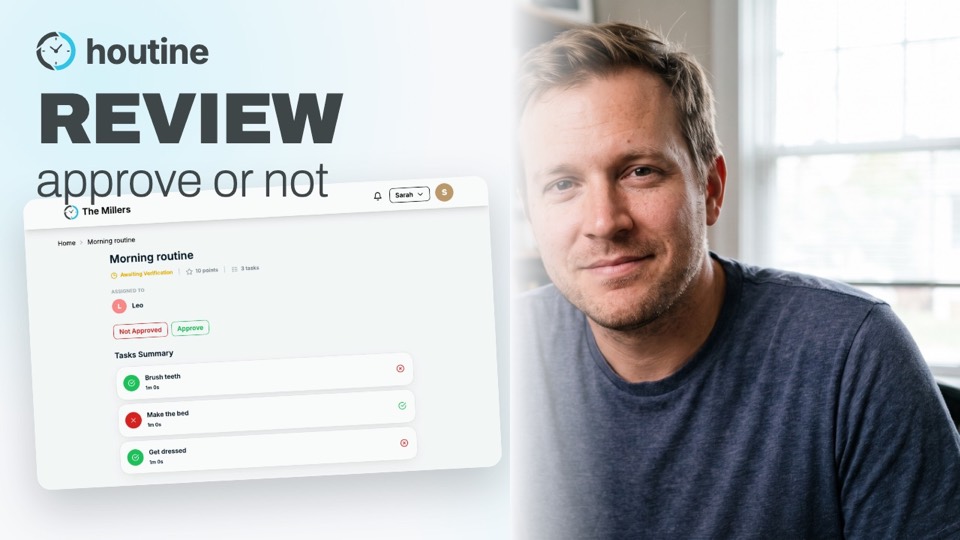
When the routine reminds your child what's next, you can encourage instead of repeating instructions. You review and approve, step by step if you want.
Example routine
Morning routine in small steps
- 1 Get out of bed
- 2 Put on clothes laid out the night before
- 3 Eat breakfast
- 4 Brush teeth
- 5 Shoes on
- 6 Backpack on
Set it up in Houtine
-
1
Create a routine with short, single-action steps and a start time.
-
2
Your child sees one step at a time and checks it off, earning points as they go.
-
3
Turn off auto-approve for your child, so you review each finished routine task by task.
-
4
Let the points add up to rewards your child picks.
Questions parents ask
Do routines help kids with ADHD?
Many parents find that predictable routines with small steps and visible progress reduce daily conflict and help their child do more independently.
How many steps should a routine have for a child with ADHD?
Start with 4 to 6 very short steps. Add more only once the routine runs smoothly.
What rewards work best?
Frequent, small and concrete ones the child chooses, like extra play time or a favorite dessert, work better than big distant rewards.
This guide shares practical ideas from families and isn't medical advice. Talk to your child's doctor or therapist about what fits your child.